

MOTS-c
Price range: $60.00 through $200.00
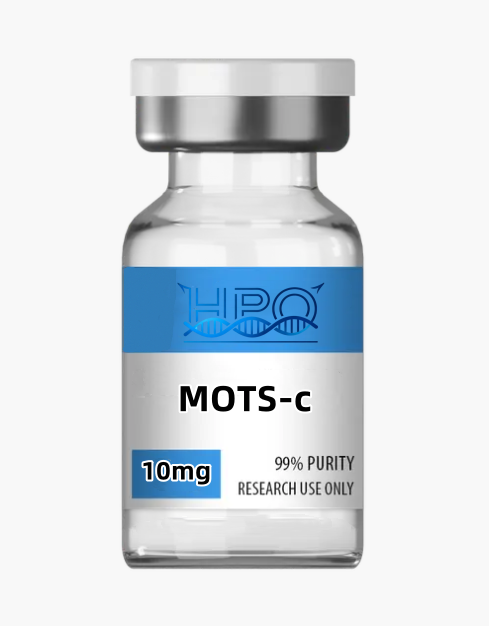
MOTS-c peptide research material for mitochondrial signaling, AMPK, metabolic-stress, and mitonuclear communication studies. Available in 10 mg, 20 mg, and 40 mg × 10-vial configurations; laboratory research use only and not for human or animal administration.
DISCLAIMER:
MOTS-c Peptide: A Research Guide to Mitochondrial Signaling
MOTS-c peptide (mitochondrial open reading frame of the 12S rRNA type-c) is a 16-amino-acid mitochondrial-derived peptide studied as a signaling link between cellular energy status, metabolic stress, and nuclear gene expression. It was first reported in 2015 from a short open reading frame within the mitochondrial MT-RNR1/12S rRNA region. The reference human sequence is MRWQEMGYIFYPRKLR. Its compact size and unusual genomic origin make MOTS-c a useful research tool for investigating mitochondrial–nuclear communication, AMPK-associated signaling, substrate metabolism, stress adaptation, and skeletal-muscle biology.
This product is supplied as research material in 10 mg × 10 vial, 20 mg × 10 vial, and 40 mg × 10 vial configurations. The amount stated on a vial is the quantity of material supplied; it is not an experimental dose or a recommendation for use. MOTS-c has no established role as an approved medicine, supplement, or performance-enhancing product. It is intended only for qualified laboratory research and is not for human or animal administration.
Identity and Molecular Features
| Research name | MOTS-c |
|---|---|
| Expanded name | Mitochondrial open reading frame of the 12S rRNA type-c |
| Class | Mitochondrial-derived peptide (MDP) |
| Reference sequence | MRWQEMGYIFYPRKLR |
| Length | 16 amino acids |
| Genomic context | Short open reading frame within mitochondrial 12S rRNA / MT-RNR1 |
| Primary research themes | AMPK signaling, folate and purine metabolism, mitonuclear communication, metabolic stress, skeletal muscle, exercise response |
| Available configurations | 10 mg × 10 vials; 20 mg × 10 vials; 40 mg × 10 vials |
MOTS-c belongs to the emerging family of mitochondrial-derived peptides, which also includes Humanin and small Humanin-like peptides. Unlike conventional nuclear-encoded mitochondrial proteins, these short peptides arise from mitochondrial genomic regions historically annotated for ribosomal RNA. Researchers should document the exact sequence, terminal state, counterion, purity method, and mass-spectrometric identity used in each experiment because these variables can affect comparability across laboratories.
How MOTS-c Is Studied
The original discovery study linked MOTS-c to cellular glucose metabolism, fatty-acid metabolism, and insulin sensitivity in cultured cells and mouse models. Metabolomic and pathway analyses indicated inhibition of the folate cycle and connected de novo purine biosynthesis, accumulation of the endogenous AMPK activator AICAR, and increased AMPK phosphorylation. This evidence supports an AMPK-centered working model, but it does not mean every MOTS-c response is caused exclusively by AMPK. Cell type, nutrient composition, exposure time, and stress intensity can change the observed phenotype.
A second major research theme is mitonuclear signaling. Under glucose restriction and other metabolic stresses, MOTS-c has been reported to move into the nucleus in an AMPK-dependent manner. There it was associated with regulation of stress-response genes, including genes containing antioxidant response elements, and with transcriptional regulators such as NRF2. This makes the peptide particularly interesting for experiments that combine subcellular localization, transcriptional profiling, and pathway perturbation.
Exercise biology is another active area. A 2021 study reported that acute exercise increased endogenous MOTS-c signals in skeletal muscle and circulation in a small group of healthy young men. The same publication found improved physical-performance measures and altered muscle metabolism in mouse experiments. Those human observations concern endogenous peptide responses to exercise; they do not establish the safety or efficacy of administering synthetic MOTS-c to people. Product descriptions that call MOTS-c an “exercise mimetic” should therefore be treated as shorthand for a preclinical research hypothesis, not as a clinical claim.
Research Applications
- Metabolic pathway studies: examining AMPK phosphorylation, ACC signaling, glucose utilization, glycolytic flux, fatty-acid oxidation, AICAR, and folate/purine pathway intermediates.
- Mitonuclear communication: studying stress-dependent nuclear translocation, subcellular localization, antioxidant response elements, NRF2-associated transcription, and mitochondrial retrograde signaling.
- Skeletal-muscle models: investigating myoblast stress adaptation, substrate preference, mitochondrial function, proteostasis, and exercise-responsive gene expression.
- Aging and cellular stress: testing how age, oxidative challenge, nutrient restriction, or senescence alters endogenous MOTS-c abundance or experimental responses.
- Metabolomics and systems biology: integrating targeted metabolite measurements with transcriptomics, proteomics, respiratory assays, and phenotypic readouts.
Researchers comparing mitochondrial signaling tools may also consider SS-31 peptide, which is commonly studied in relation to mitochondrial membranes and cardiolipin, or Humanin, another mitochondrial-derived peptide with a distinct sequence and experimental literature. For projects centered on cellular redox metabolism, the NAD+ research material page provides a separate biochemical context. These materials should not be treated as interchangeable; each requires its own hypothesis, controls, and analytical confirmation.
Experimental Design and Controls
A rigorous MOTS-c experiment starts with a defined biological question rather than a presumed benefit. Select a model that expresses the relevant pathway and establish baseline metabolic conditions before treatment. Nutrient composition is especially important: glucose concentration, serum availability, folate content, amino-acid balance, oxygen tension, and cell density can all influence AMPK and stress-response readouts.
Include matched vehicle controls and, where feasible, a sequence-specific negative control such as a scrambled peptide. A time course and concentration-response design can help separate early signaling events from secondary transcriptional or metabolic effects. Positive pathway controls are useful for confirming assay sensitivity, while AMPK inhibition or genetic knockdown may help test pathway dependence. Such perturbations require careful interpretation because broad metabolic inhibitors can produce off-target effects.
For nuclear-translocation studies, use validated fractionation markers for cytosol, nucleus, and mitochondria, and confirm localization by an orthogonal method such as confocal imaging. Fluorescent labeling can change uptake or localization, so labeled and unlabeled preparations should be compared whenever possible. For gene-expression studies, predefine target panels or analysis pipelines and report biological replicates, normalization methods, and multiple-testing procedures.
For metabolic phenotyping, combine endpoint assays with direct measurements where possible. Examples include extracellular acidification and oxygen-consumption measurements, targeted metabolomics, glucose uptake, lactate release, ATP-related measurements, and immunoblotting for phosphorylation states. Avoid inferring a complete mechanism from a single biomarker. An increase in AMPK phosphorylation, for example, is informative but does not by itself establish improved metabolic function.
Material Verification and Handling
Before use, review the lot-specific certificate of analysis and record the stated purity and identity methods. Analytical HPLC can estimate chromatographic purity, while mass spectrometry supports molecular-identity confirmation. Neither method alone establishes biological activity, sterility, endotoxin level, or suitability for a particular model. If endotoxin-sensitive cells or immune readouts are involved, use an appropriate endotoxin test and document the result.
Store unopened material under the conditions shown on the product label and certificate of analysis, protected from moisture and unnecessary temperature cycling. When preparing research solutions, use a solvent and buffer system validated for the intended assay. Solubility and stability depend on concentration, pH, ionic strength, temperature, terminal modifications, and formulation. Prepare small aliquots when appropriate to reduce repeated freeze–thaw cycles, and document preparation date, concentration, buffer, storage condition, and number of thaw cycles.
Confirm compatibility before mixing MOTS-c with reducing agents, preservatives, carrier proteins, organic solvents, or other test compounds. Inspect solutions for precipitation or unexpected color change, but do not use appearance as a substitute for analytical testing. For quantitative work, account for peptide content, counterions, residual water, and any excipients reported in the lot documentation.
Interpreting the Evidence
Most mechanistic evidence for synthetic MOTS-c comes from cell culture and animal studies. The human literature includes observational measurements of endogenous MOTS-c and small experimental cohorts, but it does not establish approved therapeutic indications, clinical dosing, long-term safety, or performance benefits from exogenous use. Results can also differ among tissues and experimental systems. Recent work in human mesenchymal stromal cells, for example, reported metabolic signaling alongside reduced reparative function under the tested conditions, illustrating why pathway activation should not automatically be interpreted as a universally beneficial phenotype.
Use species, sex, age, metabolic status, and genetic background as planned variables rather than afterthoughts. Mitochondrial genetic variation may also matter because MOTS-c is encoded within mtDNA. Conclusions should be limited to the model, preparation, and endpoints actually studied, and translational language should remain appropriately cautious.
Frequently Asked Questions
What does MOTS-c stand for?
MOTS-c stands for mitochondrial open reading frame of the 12S rRNA type-c. It refers to a short peptide sequence associated with an open reading frame in the mitochondrial 12S rRNA region.
Is MOTS-c a mitochondrial-targeting peptide?
Not in the usual delivery-vector sense. MOTS-c is classified as a mitochondrial-derived peptide because of its genomic origin and signaling biology. Its reported actions include cytosolic metabolic effects and stress-dependent nuclear translocation.
Does MOTS-c activate AMPK?
Multiple preclinical studies report AMPK-associated responses. The 2015 discovery paper connected MOTS-c with folate/purine metabolism, AICAR accumulation, and AMPK activation. Researchers should still test pathway dependence in their own model instead of assuming it.
Is MOTS-c proven to improve exercise performance in humans?
No. Published human findings include changes in endogenous MOTS-c after exercise, while performance effects were primarily evaluated in animal models. These results do not demonstrate that synthetic MOTS-c is safe or effective for human performance enhancement.
Can the vial amount be used as a dosing guide?
No. The vial amount describes the quantity supplied. It is not a dosing instruction. Experimental conditions must be derived from an approved protocol, relevant literature, pilot data, and the requirements of the selected model.
Does chemical purity establish biological activity or sterility?
No. Chromatographic purity and molecular identity do not establish biological activity, sterility, endotoxin levels or suitability for a particular model. Select fit-for-purpose analytical and functional tests and review the lot-specific documentation.
Is there a universal solution-storage condition for MOTS-c?
No. Follow the current label and lot documentation, then validate the actual buffer, concentration, container and storage interval used in the experiment. Record preparation dates and freeze–thaw exposure, and use a stability-indicating method when quantitative recovery matters.
Additional Research Catalog Navigation
Separate catalog identities can be reviewed on the AICAR, reduced glutathione, 5-Amino-1MQ, FOXO4-related peptide, and Mazdutide pages. These navigation links do not imply equivalent mechanisms, interchangeable materials, clinical suitability or recommended combinations. Evaluate each research material independently.
Selected Research References
- Lee C, et al. The mitochondrial-derived peptide MOTS-c promotes metabolic homeostasis and reduces obesity and insulin resistance. Cell Metabolism. 2015;21(3):443–454. PubMed.
- Kim KH, et al. The mitochondrial-encoded peptide MOTS-c translocates to the nucleus to regulate nuclear gene expression in response to metabolic stress. Cell Metabolism. 2018;28(3):516–524.e7. PubMed.
- Reynolds JC, et al. MOTS-c is an exercise-induced mitochondrial-encoded regulator of age-dependent physical decline and muscle homeostasis. Nature Communications. 2021;12:470. Article.
Research-use notice: This material is supplied exclusively for laboratory research by qualified professionals. It is not a medicine, cosmetic, dietary supplement, food, or veterinary product. It is not for human or animal administration, consumption, diagnosis, treatment, prevention, or performance enhancement. Researchers are responsible for institutional approval, legal compliance, risk assessment, and safe laboratory practice.
| Specification | 10mg*10vials, 20mg*10vials, 40mg*10vials |
|---|
Only logged in customers who have purchased this product may leave a review.
Related products




Reviews
There are no reviews yet.